
- Published on
Parasakthi Movie Review
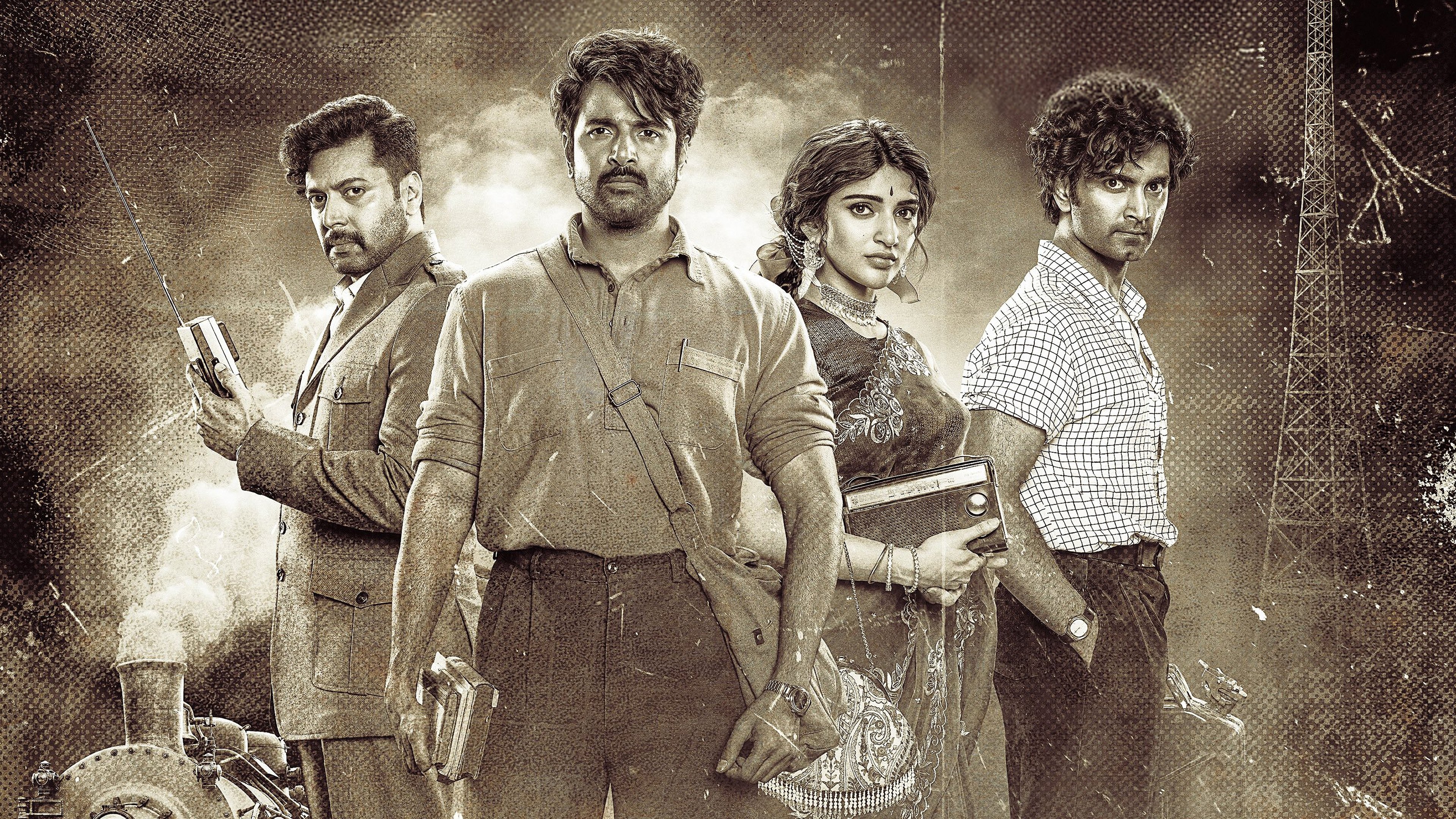
Parasakthi is set in the mid-1960s against the backdrop of the anti-Hindi imposition movement in South India. Although the film opens with a lengthy disclaimer stating that it is a work of fiction, it is clearly inspired by real events. Given the time of its release and its indirect political associations, one may question whether it stands purely as a work of art or functions as political propaganda. However, the film largely remains controlled in its approach and does not intrude heavily into active political space.
The casting is one of the film’s strengths. Not only the lead characters but also those portraying Karunanidhi (Guru Somasundaram), Prakash Belawadi, Anna (Chetan), and the Indira Gandhi-like character were well chosen. Ravi Mohan delivers a strong performance as the antagonist, both in appearance and temperament, resembling the antagonist from The Shape of Water. Interestingly, both characters also lose a finger due to the protagonist, which adds a symbolic layer. Sivakarthikeyan and Atharvaa perform well but do not deliver anything particularly exceptional. Sreeleela stands out as a charming rebel, and her screen presence is enjoyable. A nice touch is having the film’s disclaimer announced by her character, who works as a radio announcer within the story.
The romantic portions feel somewhat forced, and the songs along with their choreography appear to exist merely to extend the runtime. Given the already lengthy duration and a winter release, it becomes a real test of audience patience.
The film makes a deliberate effort to repeatedly clarify that it is not against the Hindi language or Hindi-speaking people, but rather against the imposition of Hindi on non-Hindi speakers. Despite this, subtle mockery can still be sensed in a few moments. Indira Gandhi is portrayed in a somewhat negative light, particularly through private conversations and her perceived inflexibility, which is shown as a catalyst for widespread violence and chaos. How much of this portrayal is factual remains unclear.
Ravi Mohan’s character often feels like an immortal, programmed force of aggression, which pulls the narrative away from realism. Whether this is meant to symbolize a larger ideological group is left ambiguous. The film also appears to challenge the idea that power in India is distributed, portraying both the state government and its representatives as largely powerless. At one point, Sivakarthikeyan’s character states that issues should be addressed through elected representatives rather than agitations. This idea feels like a loose end, as it is never properly explored or resolved later in the film.
Like several other ambitious pan-Indian films such as Jailer and Coolie, this film introduces heroes from other states toward the end. Here, it is done more organically, and the Kerala cameo in particular creates a memorable theatrical moment.
The music supports the narrative but lacks standout or memorable tracks. The screenplay occasionally lags, and there is some confusion regarding time and space, particularly in how characters move between locations, unless one assumes extraordinary speed from Sreeleela’s car.
The issue the film addresses is both relevant and important. One of its strengths lies in treating language as a tool for communication rather than romanticizing it, which many films tend to do. Although the film slightly contradicts this stance toward the end, it remains mostly balanced. Compared to Soorarai Pottru, which feels less grounded, Parasakthi emerges as the stronger film. Overall, it is a decent one-time watch.